Dinamika Garis Kemiskinan dan Tingkat Kemiskinan 10 Provinsi di Indonesia Tahun 2015-2024
DOI:
https://doi.org/10.61132/jbep.v2i4.1808Keywords:
GRDP, Inflation, Panel Data Regression, Poverty Line, Provincial Minimum WageAbstract
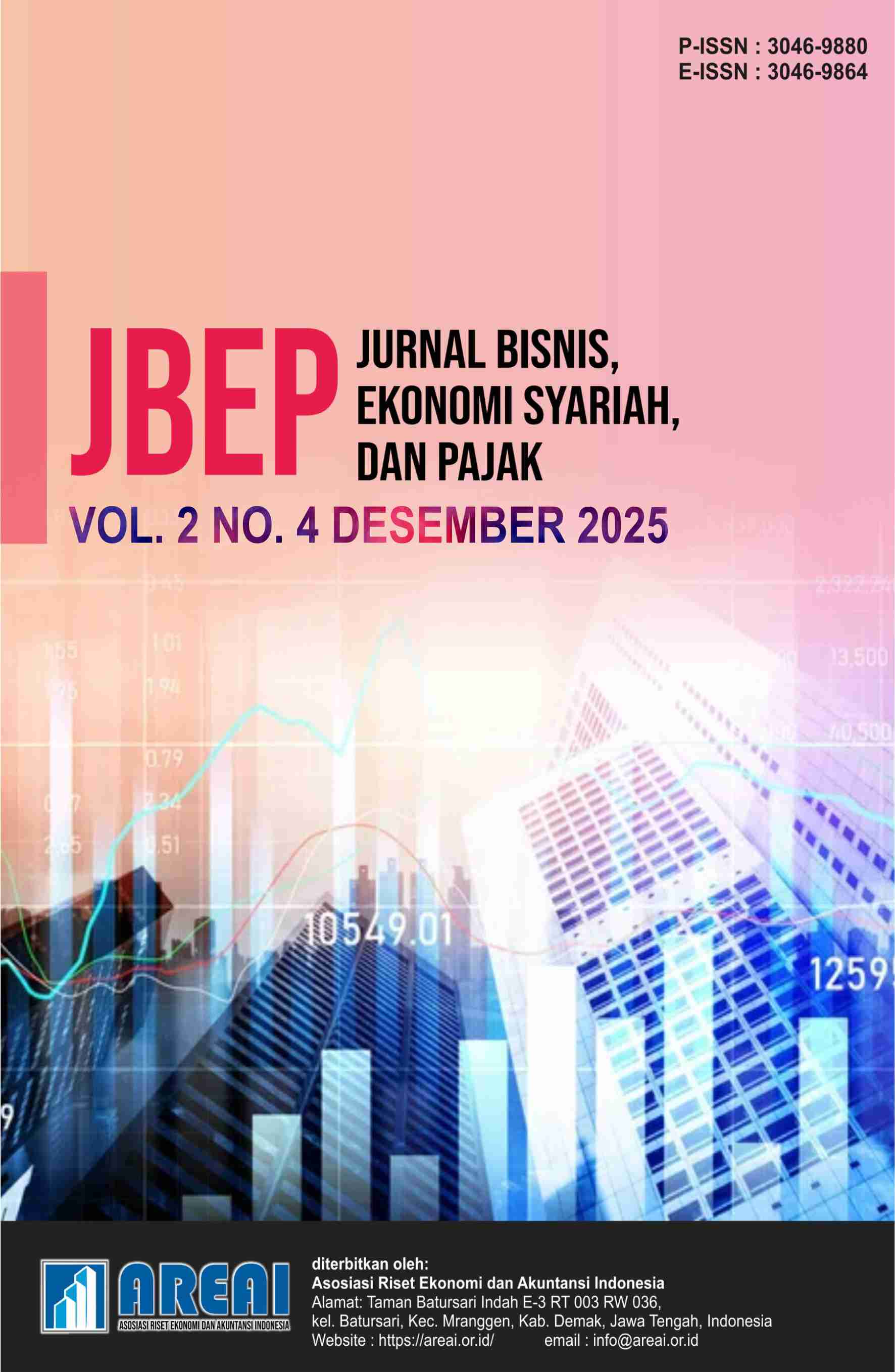
This study aims to analyze the effect of inflation, Gross Regional Domestic Product (GRDP), and the Provincial Minimum Wage (PMW) on the poverty line in 10 provinces in Indonesia. The research employs a quantitative approach using panel data regression analysis. The data utilized in this study consist of panel data covering a 10-year period, from 2015 to 2024, obtained from the Provincial Offices of Statistics and Statistics Indonesia (Badan Pusat Statistik/BPS). To examine the relationship between variables across regions and over time, the fixed effect model is applied in the analysis. The results of the analysis indicate that inflation and GRDP do not have a statistically significant effect on the poverty line in the 10 provinces examined. These findings suggest that although inflation and GRDP are important macroeconomic indicators, their variations during the study period were not sufficient to directly influence changes in the poverty line across the provinces. In contrast, the Provincial Minimum Wage (PMW) is found to have a significant effect on the poverty line. This result implies that increases in the minimum wage play a crucial role in improving household purchasing power, which can contribute to reducing poverty levels. Overall, the findings highlight the importance of wage policy as an effective instrument for poverty alleviation at the provincial level. While broader economic growth and price stability remain important, policies related to minimum wage determination appear to have a more direct and measurable impact on poverty conditions. Therefore, policymakers are encouraged to consider wage policies alongside other macroeconomic strategies to achieve more effective poverty reduction outcomes.
Downloads
References
Amalia, F. (2012). Pengaruh pendidikan, pengangguran dan inflasi terhadap tingkat kemiskinan di kawasan timur Indonesia (KTI) periode 2001-2010. X, 158–169. https://doi.org/10.21009/econosains.0102.02
Ammar, T., & Nugraha, A. (2022). Pemodelan regresi data panel pada faktor terbuka di Jawa Barat. 147–161.
Arif, M., & Alfana, F. (2024). Pengaruh kondisi ekonomi terhadap indeks pembangunan manusia di Provinsi Jawa Tengah tahun 2020-2022. Qorisa Nur Laila, Muhammad Arif Fahrudin Alfana, S.Si., M.Sc., 119–127.
Artikel, I. (2020). Abstrak distribusi pendapatan di Pulau Jawa masih belum merata, pertumbuhan ekonomi di. 3(2), 21–34.
Aulia, R., Marpaung, R., Sintia, I., & Rahayu, F. (2023). Analysis of the effect of open unemployment rate and human development index on poverty in North Sumatra province. 2(5), 361–376. https://doi.org/10.55927/ijar.v2i5.4141
Bank Indonesia. (n.d.). Inflasi.
D, G. I., T Naukoko, A., & Mandeij, D. (2022). Efisiensi terhadap tingkat kemiskinan di Kabupaten Tana Toraja. Jurnal Berkala Ilmiah, 22(6), 13–24.
Fakultas Bisnis, Ilmu Sosial, & Universitas Muhammadiyah Sidoarjo. (2024). Pertumbuhan ekonomi di Indonesia. 7, 10347–1059.
Faradis, R., & Afifah, U. N. (2023). Poverty line based on the large archipelagic area in. 8(2), 222–235. https://doi.org/10.20473/jiet.v8i2.46331
Gulo, J. (2025). Identifikasi faktor penentu kemiskinan di Indonesia melalui pendekatan regresi linier berganda.
Janet, M., Simanjuntak, L., & Riwayat Artikel. (2025). Garis kemiskinan di DKI Jakarta: Analisis regresi non-linear dengan GAM. 2(2), 457–465. https://doi.org/10.62335/aksioma.v2i2.868
Kamagi, S. H. R., Yunus, R., Parinding, K. A., & Yunus, S. (2024). Jurnal politik dan pemerintahan daerah vol 6 no 2 tahun 2024, p 257-270. 6(2), 257–270. https://doi.org/10.36355/jppd.v6i2.179
Kemiskinan, D. (2023). Pengenalan indikator kemiskinan dan ketimpangan.
Kuliah, M. (2026). Jadwal ujian tengah semester ganjil jurusan ekonomi pembangunan tahun akademik 2025/2026. 5–8.
Laut, L. T., Putri, A. S., & Septiani, Y. (2020). Pengaruh PMA, PMDN, TPAK, PDRB perkapita, pengeluaran pemerintah terhadap disparitas pendapatan Jawa. Stability: Journal of Management and Business, 3(2), 21–34. https://doi.org/10.26877/sta.v3i2.7781
Mahila, S. (2017). Analisis mekanisme penetapan upah minimum Provinsi Jambi tahun 2015. Jurnal Ilmiah Universitas Batanghari Jambi, 15(3), 164–170.
Mahila, S. (2017). Analisis mekanisme penetapan upah minimum Provinsi Jambi tahun 2015. Jurnal Ilmiah Universitas Batanghari Jambi, 15(3), 164–170.
Manajemen, J. (2022). Analisis pengaruh jumlah penduduk, pertumbuhan ekonomi terhadap kemiskinan. 7(2), 1311–1315. https://doi.org/10.33087/jmas.v7i2.593
World Bank. (2025). Bank Dunia memperbarui garis kemiskinan global: Indonesia.
World Bank. (2025, June 13). Bank Dunia memperbarui garis kemiskinan global: Indonesia.
Downloads
Published
Issue
Section
License
Copyright (c) 2025 Jurnal Bisnis, Ekonomi Syariah, dan Pajak

This work is licensed under a Creative Commons Attribution-ShareAlike 4.0 International License.